Introduction
Getting iso 14001 certification is no longer just a box to tick for compliance reasons. For thousands of companies operating in manufacturing, construction, services, and logistics sectors, it has become a genuine business necessity. The way a product gets made, used, and eventually disposed of carries real environmental consequences at every step. And those consequences are now under closer scrutiny than ever before, from regulators, investors, and customers alike.
Yet here is something many businesses overlook: ISO 14001:2015 does not just ask you to manage what happens inside your four walls. It expects you to think beyond that. Clause 6.1.2 of the standard specifically requires organisations to take a life cycle perspective when identifying their environmental aspects. This means thinking about your product from raw material extraction right through to end-of-life disposal.
That shift in thinking can feel daunting, but it is also an incredible opportunity. Companies that take product life cycle mapping seriously tend to find hidden environmental risks, uncover cost savings, and build stronger supplier relationships. Let us break down what this means in practice and why it matters for your business.
What Is Product Life Cycle Mapping Under ISO 14001:2015?
The Basic Idea
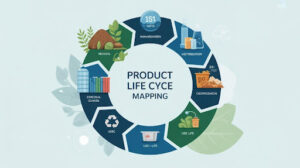
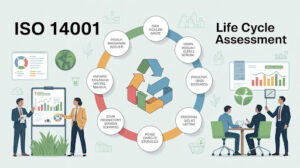
A product life cycle refers to all the stages a product goes through from the moment raw materials are extracted to the moment it is discarded, recycled, or reused. In the context of iso 14001:2015 certification for environmental management, life cycle thinking means identifying the environmental aspects associated with each of those stages.
These stages typically include:
- Raw material extraction: Mining, logging, farming, or chemical production
- Manufacturing and processing: Energy use, water consumption, waste generation
- Packaging and distribution: Transport emissions, packaging waste
- Product use phase: Energy consumption, emissions, maintenance needs
- End of life: Disposal, recycling potential, landfill contribution
Mapping these aspects helps your organisation understand where the biggest environmental impacts occur and what can realistically be controlled or influenced.
What Clause 6.1.2 Actually Requires
ISO 14001:2015 does not mandate a full formal Life Cycle Assessment (LCA) under ISO 14040. What it does require is that organisations consider life cycle stages when determining their environmental aspects. This is a more practical, proportionate approach. You do not need to commission an expensive LCA study for every product. Instead, you need a structured process to identify which stages you can control, and which you can only influence through procurement choices, design decisions, or supplier engagement.
Environmental Aspect Life Cycle Assessment: What You Need to Know
The term environmental aspect life cycle assessment gets used in different ways, so let us clarify the meaning within the ISO 14001 framework.
An environmental aspect is any element of your activities, products, or services that interacts with the environment. An impact is the change in the environment that results from that interaction. Life cycle assessment, in a broad sense, is the process of tracing these aspects across every stage of a product’s life.
A Practical Example
Consider a furniture manufacturer based in Delhi NCR. When they map the life cycle of a wooden chair, they might identify the following environmental aspects:
- Upstream: Deforestation risk in timber sourcing, chemical processing of raw wood
- Manufacturing: Energy use in cutting and finishing, VOC emissions from lacquers
- Distribution: Carbon emissions from lorry transport to retailers
- Use phase: Minimal impact, though treated wood may off-gas over time
- End of life: Landfill contribution if not recycled or reused
By mapping these aspects, the company identifies that timber sourcing and end-of-life disposal carry the highest environmental risks. They can now set objectives to engage FSC-certified suppliers and design for disassembly to improve recyclability. Both actions would strengthen their environmental performance significantly.
Significant Aspects vs. Non-Significant Aspects
Not every environmental aspect identified in a life cycle map will be significant. Your EMS only requires detailed controls for significant aspects. Significance is typically determined by evaluating:
- The scale of the environmental impact
- The severity and reversibility of the impact
- The probability that the impact will occur
- Whether regulatory requirements apply
- The views of interested parties, including local communities and customers
A scoring matrix, typically a 3×3 or 5×5 grid, is often used to evaluate and document this determination. The results feed directly into your environmental objectives and management programmes.
Benefits of Life Cycle-Based Environmental Management
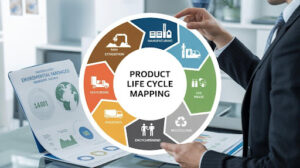
Organisations that approach iso 14001 certification through a life cycle lens gain far more than just a certificate. Here are the core benefits worth understanding.
1. Proactive Risk Management
Life cycle mapping surfaces environmental risks before they become regulatory problems. If your packaging supplier uses a solvent banned under new regulations, knowing that at the procurement stage saves you significant remediation costs later. Proactive identification beats reactive response every time.
2. Stronger Regulatory Compliance
Environmental regulations in India are tightening year on year. The Environment Protection Act, Hazardous Waste Rules, and Extended Producer Responsibility (EPR) regulations all touch different parts of a product’s life cycle. A mapped approach ensures nothing slips through the gaps.
3. Cost Reduction Through Efficiency
When you map your product life cycle, you frequently uncover waste streams that were invisible before. One Indian textile company reduced its dyeing water consumption by 30% simply by mapping the manufacturing phase more carefully and engaging its chemical suppliers. Cost savings and environmental improvements went hand in hand.
4. Enhanced Supplier Relationships
Clause 8.1 of ISO 14001:2015 requires you to communicate your environmental requirements to suppliers. Life cycle mapping gives you a clear basis for those conversations. Instead of vague requests for green practices, you can ask specific, informed questions about chemical usage, energy sources, or waste disposal methods.
5. Competitive Advantage in Global Markets
International buyers, particularly from the EU, increasingly require their suppliers to demonstrate environmental credentials. Companies holding iso 14001:2015 certification for environmental management with documented life cycle thinking are better positioned to win these contracts. In sectors like automotive components, electronics, and pharmaceutical packaging, this is already a market entry requirement in many tender processes.
6. Improved Brand Reputation
Consumers are paying more attention to environmental claims than ever. According to a 2024 Nielsen report, 73% of global consumers say they would definitely or probably change their buying habits to reduce environmental impact. Demonstrating genuine life cycle awareness strengthens your credibility and builds long-term customer loyalty.
7. Alignment With ESG Reporting
For listed companies and those seeking investment, Environmental, Social and Governance (ESG) reporting is now standard practice. Life cycle data feeds directly into Scope 3 emissions reporting, which covers supply chain impacts. Having this data mapped and documented through your EMS makes ESG disclosures far more straightforward.
How to Map Product Life Cycles for ISO 14001 Compliance: A Step-by-Step Approach
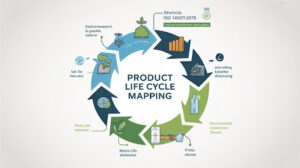
Step 1: Define Your Product Scope
Begin by listing all products and services your organisation provides. For each, define the boundaries of the life cycle you will assess. Decide whether you will assess cradle-to-gate (raw materials to dispatch), gate-to-grave (your operations to end of life), or the full cradle-to-grave cycle.
Step 2: Identify Life Cycle Stages
Break each product down into its constituent life cycle stages. Use the standard framework: raw material, manufacturing, packaging, distribution, use phase, and end of life. Document which stages you directly control and which you can only influence.
Step 3: Identify Environmental Aspects at Each Stage
For each life cycle stage, brainstorm the environmental aspects. Engage your operational teams, procurement staff, and product designers in this process. Their on-the-ground knowledge is invaluable.
Step 4: Evaluate Significance
Apply your significance evaluation criteria to each identified aspect. Document your scores and decisions. This forms the heart of your environmental aspect register.
Step 5: Set Objectives and Controls
For significant aspects, set measurable environmental objectives. Link these to management programmes with clear timelines, responsibilities, and resource allocations. Review progress in your management review meetings.
Step 6: Communicate With the Supply Chain
Where life cycle mapping reveals supplier-related risks, initiate supplier engagement. Share your environmental requirements, conduct supplier audits where necessary, and track improvements over time.
The Role of ISO 14001 Consultancy Services in Simplifying Life Cycle Mapping
Life cycle mapping can appear complex, especially for organisations attempting it for the first time. This is where professional guidance makes a tangible difference. Experienced iso 14001 consultancy services in Delhi NCR can help businesses navigate the technical requirements of Clause 6.1.2, build practical aspect registers, and design management programmes that are both compliant and genuinely useful.
A skilled iso 14001 certification consultant in Gujarat will typically bring industry-specific knowledge about common environmental aspects in your sector. This saves considerable time compared to building a life cycle map from scratch with no reference points.
Consultants also provide value in training your internal teams. Sustainable EMS implementation requires that your environmental manager, operations staff, and procurement teams all understand why life cycle thinking matters, not just what the standard requires. Internal competence is ultimately what keeps an EMS functioning effectively between external audits.
Q&E Consultancy has supported businesses across the manufacturing, chemical, healthcare, and construction sectors in building robust ISO 14001 systems that go well beyond basic compliance. Their consultants bring hands-on experience with life cycle mapping, supplier engagement strategies, and audit preparation, helping organisations turn environmental management into a genuine competitive asset.
Common Mistakes Businesses Make With Life Cycle Mapping
Treating It as a Paper Exercise
Some organisations create an aspect register that looks good on paper but has no connection to actual operational decisions. Life cycle mapping only delivers value when it informs real controls, procurement choices, and investment decisions.
Limiting the Assessment to Own Operations
A frequent error is restricting the life cycle map to activities within the company’s direct control, ignoring upstream suppliers and downstream customers. The standard explicitly requires you to consider stages you can influence, even if you cannot directly control them.
Failing to Review and Update
Product formulations change, new suppliers are onboarded, and regulations evolve. Life cycle maps must be reviewed regularly, particularly when there are significant changes to products, processes, or the regulatory landscape.
Not Involving Cross-Functional Teams
Environmental management is too often siloed in one department. Effective life cycle mapping requires input from procurement, R&D, operations, logistics, and sales. Each function holds knowledge that the environmental team alone cannot access.
Conclusion
Product life cycle mapping is not optional under ISO 14001:2015. It is the foundation upon which a credible, effective Environmental Management System is built. Organisations that take this requirement seriously gain far more than certification status. They gain genuine insight into their environmental footprint, stronger supplier accountability, regulatory resilience, and a compelling story to tell customers and investors.
The journey to meaningful iso 14001 certification starts with understanding where your true environmental impact lies. That means looking beyond your own premises and asking harder questions about where your materials come from and where your products end up.
If you are ready to take that step, working with experienced consultants can make the process far more manageable. Q&E Consultancy offers end-to-end support for businesses seeking to implement ISO 14001 with rigour, including life cycle mapping, environmental aspect registration, supplier engagement, and certification audit preparation. Their team understands the practical realities of running a business while meeting world-class environmental standards.
Visit https://qeconsultancy.com/ to learn more about how they can support your environmental management journey.
Frequently Asked Questions (FAQs)
1. Does ISO 14001:2015 require a formal Life Cycle Assessment (LCA)?
No. ISO 14001:2015 requires a life cycle perspective when identifying environmental aspects, but it does not mandate a full formal LCA study under ISO 14040 or 14044. A documented, structured approach to mapping aspects across life cycle stages satisfies the requirement.
2. How does an environmental aspect differ from an environmental impact?
An environmental aspect is an element of your activities that can interact with the environment, for example, using diesel in transport. An environmental impact is the actual change to the environment that results, such as increased greenhouse gas concentrations. Under ISO 14001, you identify aspects and then manage them to control their associated impacts.
3. How often should a life cycle map be reviewed?
Your aspect register and life cycle map should be reviewed at least annually and also whenever significant changes occur. These changes include new products, new suppliers, process modifications, changes in legislation, or feedback from interested parties such as regulatory bodies or local communities.
4. Can small businesses undertake life cycle mapping for ISO 14001 compliance?
Absolutely. Life cycle mapping is proportionate to the size and complexity of your organisation. A small manufacturing business might map just one or two core products with five or six life cycle stages. The depth of analysis need not be the same as that of a multinational corporation, provided it is systematic and documented.
5. How do iso 14001 consultancy services in Delhi NCR help with life cycle mapping?
Qualified consultants bring sector-specific knowledge, proven templates, and audit experience that accelerate the mapping process. They help identify significant aspects accurately, avoiding over-documentation of trivial aspects while ensuring nothing critical is missed. This targeted support shortens the certification path and builds internal team capability at the same time.